
By Darren Russell
Everyone knows about our black and white badgers with their familiar striped face but, did you know that not all badgers are black and white?
Rare genetic variations mean they can appear in shades of ginger, sandy, creamy white, or even totally black.
- Erythristic (Ginger Badgers): These badgers have a rare mutation causing reddish, sandy, or ginger fur on their back and sides, but with black eyes.
- Leucistic (White Badgers): These exhibit a partial loss of pigmentation, resulting in lighter, whiter, or patchy coats, but with black eyes.
- Albino: Extremely rare, these have a complete lack of pigment, resulting in white fur and pink/red eyes.
- Melanistic: Very rarely, a badger may appear entirely black
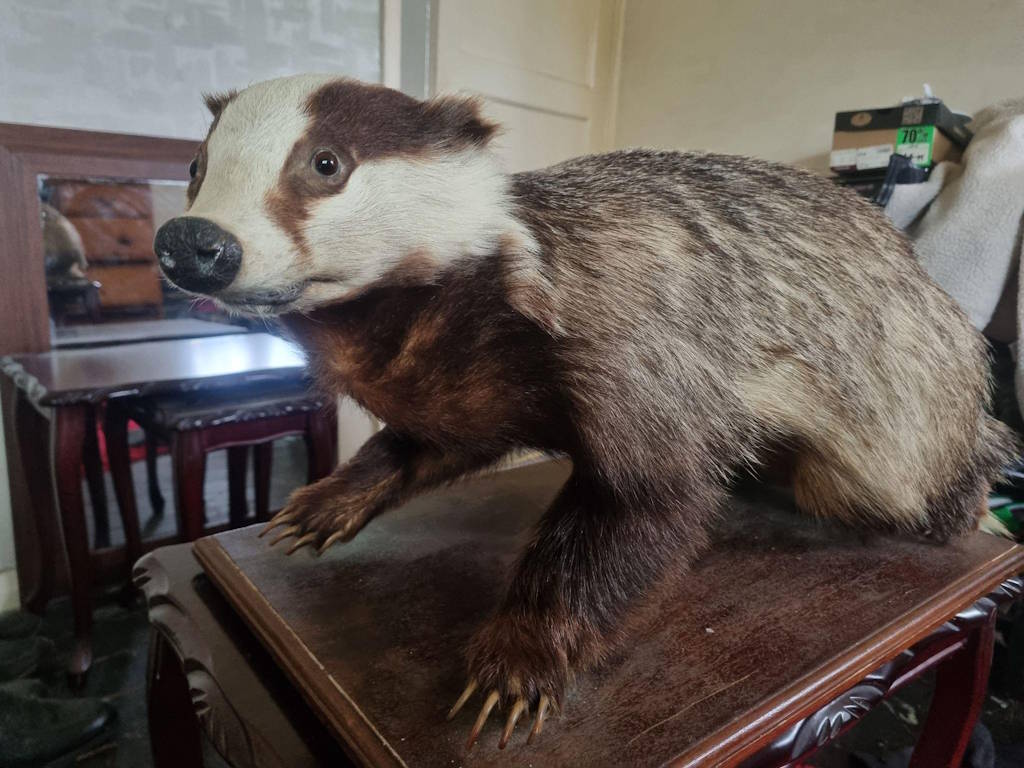
Dave, our Erythristic badger model
Bromley has the biggest population of leucistic badgers in the whole of London, according to the Badger Trust, with two specific areas known to our Bromley Field Officer. Reports from local residents thinking that they have seen “a ghost badger” or “a baby Polarbear” in their garden have been received by our Bromley team.
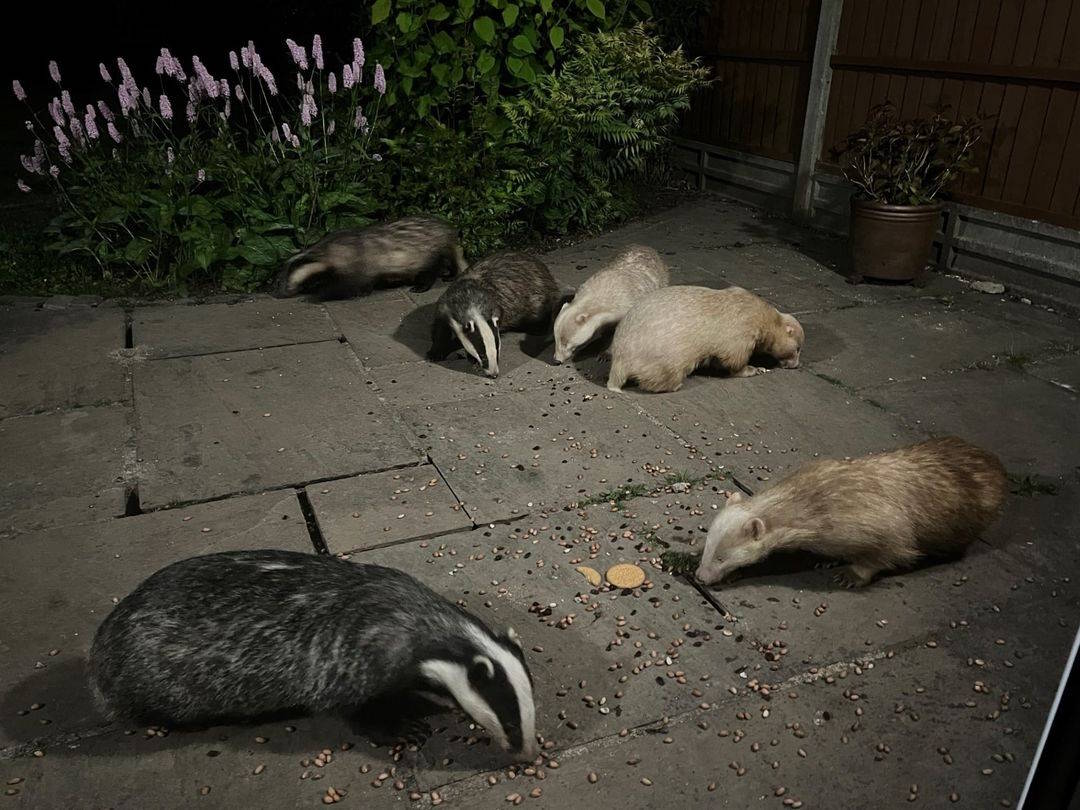
Photo from a Bromley residents garden
We have also received reports and images of Albino badgers in the borough too, with one a recorded road death.
Melanistic badgers are very rare, especially here in the UK, but luckily here is footage from Berks, Bucks and Oxon Wildlife Trust:
https://www.facebook.com/bbowildlifetrust/videos/melanistic-badger/1378976305893806/
Here a video of a leucistic badger that was captured by one of our trail cameras in our area: